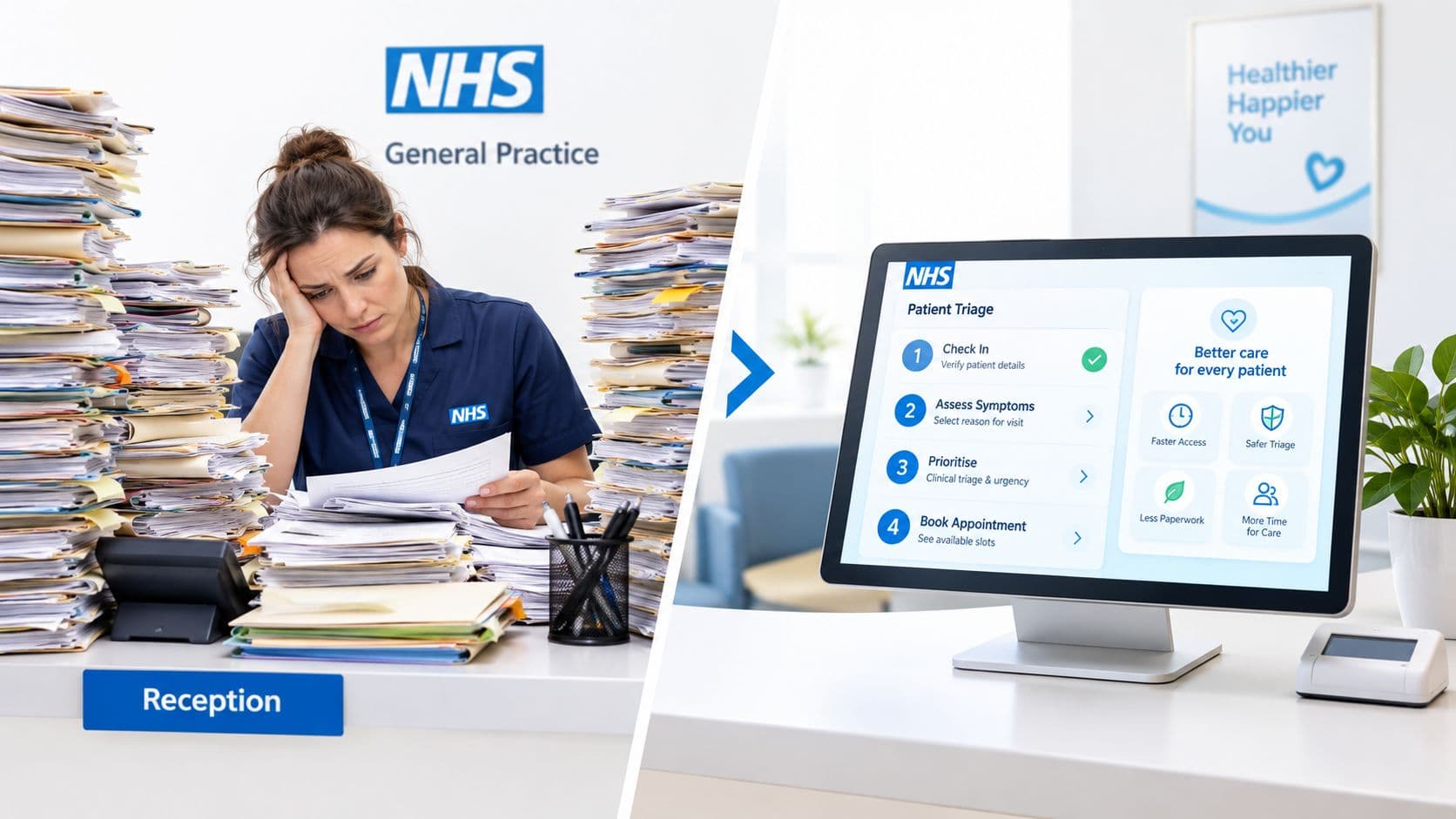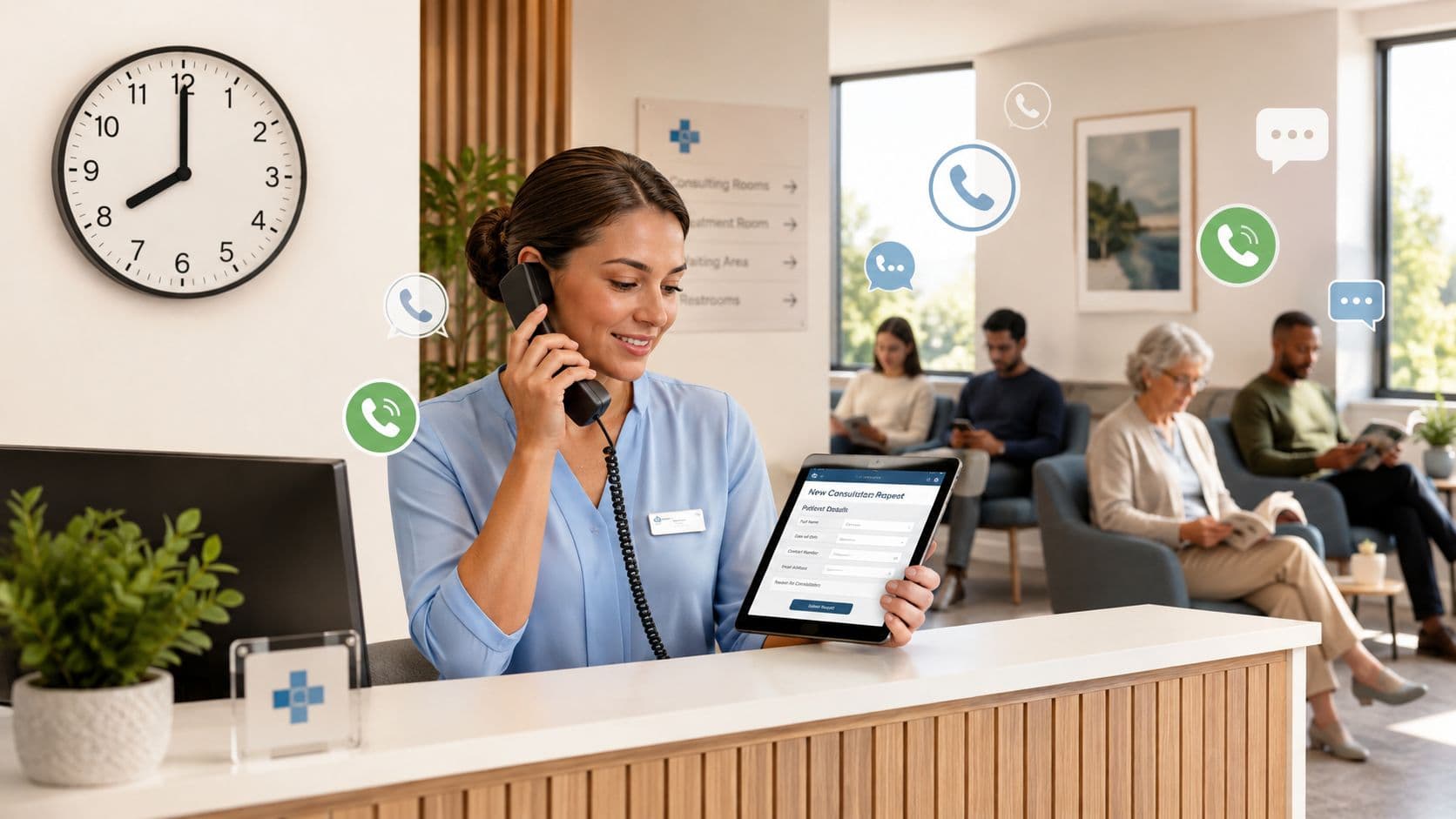
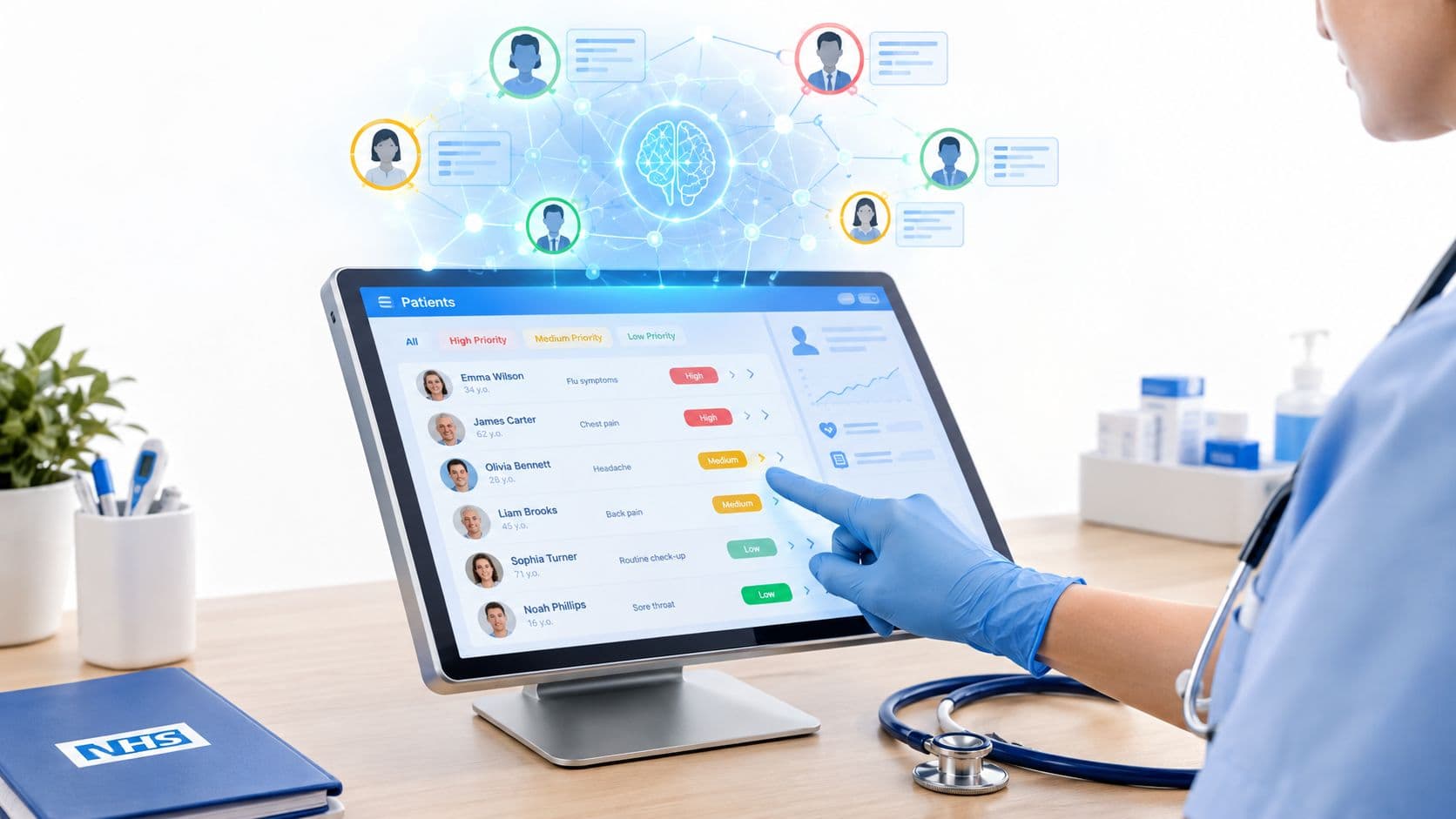
If your practice is still fielding calls at 8am, rekeying the same symptoms into a form, and asking a clinician to sort every request by hand, you already know the problem. Demand keeps arriving, patients expect faster routing, and the team still has to decide what matters first.
Autonomous AI triage is only useful if it changes that operating model. In UK primary care, that means a governed workflow that gathers patient-reported information, interprets urgency automatically, and routes people to the right next step without a clinician doing the initial sorting every time.
The Five Models of GP Triage
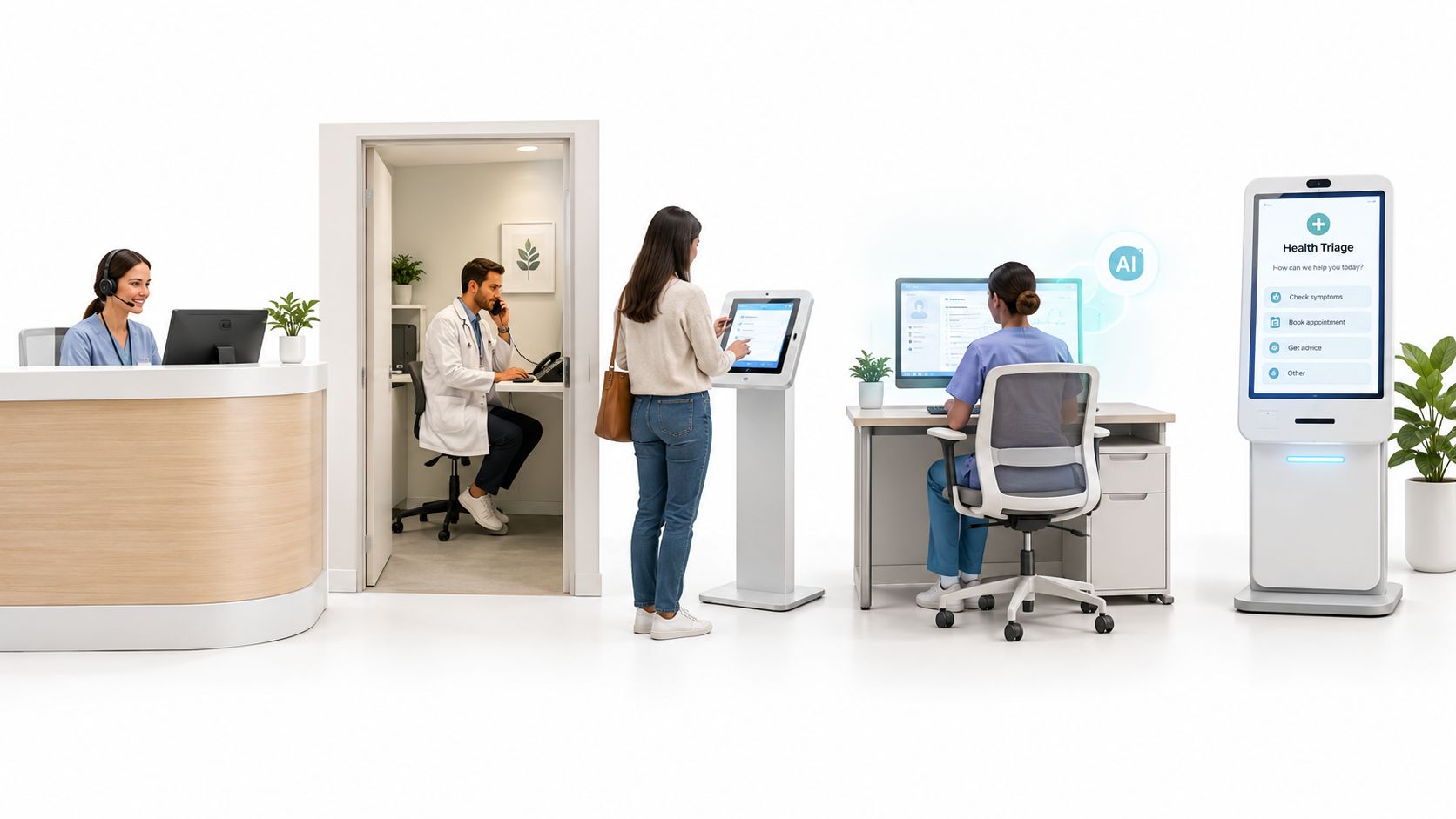
The easiest way to understand what is autonomous AI triage is to place it after the four earlier models practices already use. Those models are not wrong. They each solve part of the access problem, just not the whole thing.
| Triage Model | Initial Sorting Performed By | Operational Outcome |
|---|---|---|
| Manual reception triage | Reception team | Requests are filtered by phone or at the desk, then passed on |
| Manual GP-led triage | GP | A clinician reviews demand before the next step is chosen |
| Form-based online consultation | Patient form, then practice team | Information is captured digitally, but staff still sort the queue |
| AI-assisted total triage | Human reviewer with AI support | AI helps organise demand, but a person still decides the route |
| Autonomous AI triage | The system | The initial sorting step is removed, and the request is routed automatically |
That distinction matters. A form-based system can digitise demand, and AI-assisted triage can speed up review, but both still depend on a human to make the first call. Autonomous triage shifts the work earlier, so the system makes the initial urgency decision and sends the case onward.
A useful parallel is pre-deployment triage for technical support tooling, where the point is not just to collect a ticket but to sort it before a person wastes time on the wrong queue. For a practical example of that mindset in another domain, see pre-deployment triage for MCP tools.
Practical rule: if a product only collects information and waits for staff to interpret it, it's still a human triage model, just a better-organised one.
The later models are more useful than the earlier ones when demand is already overwhelming. But only autonomous AI triage removes the manual triage step itself.
Defining Autonomous AI Triage in Primary Care
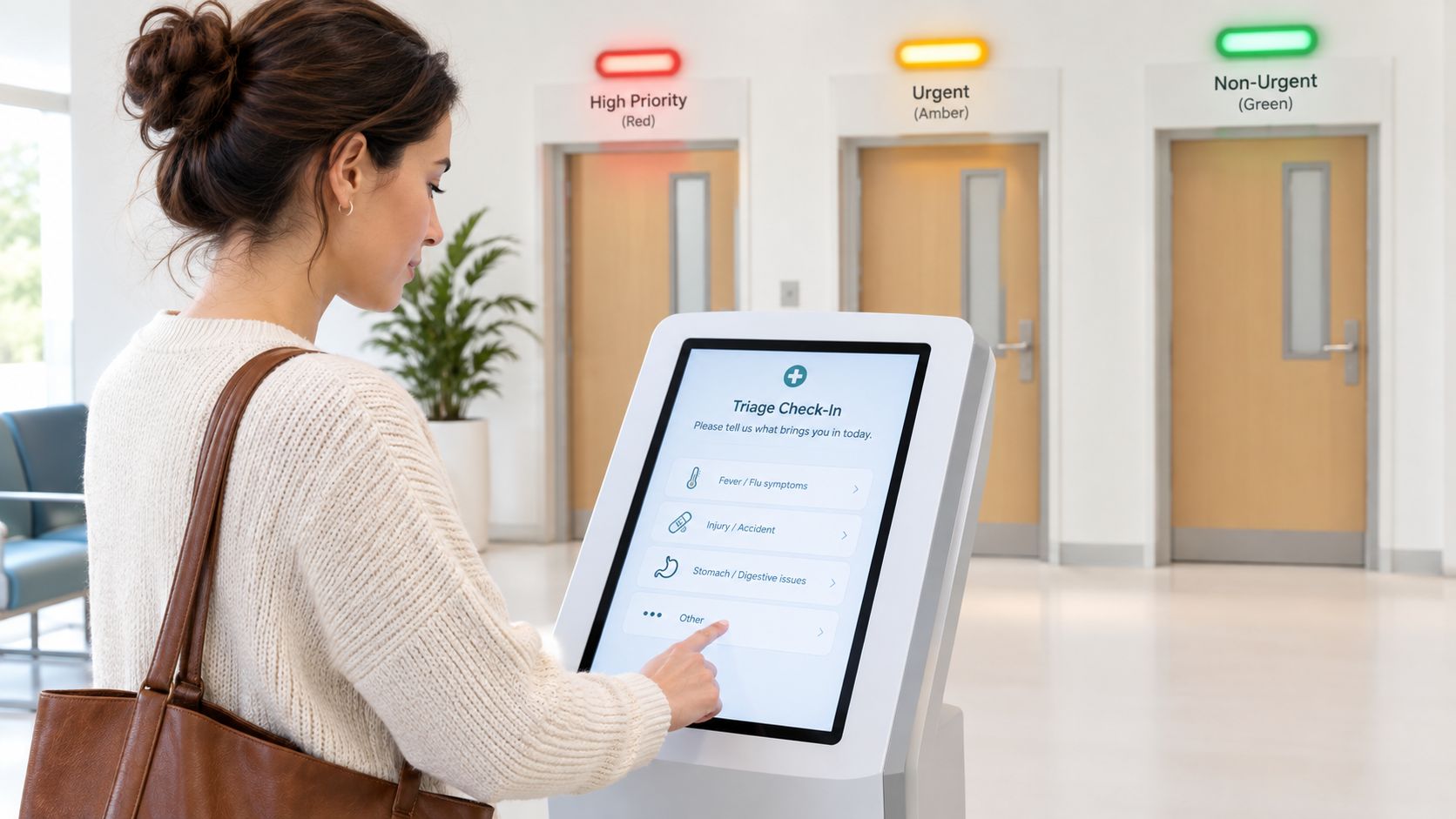
In primary care, autonomous AI triage is software that gathers structured patient symptoms and risk factors, applies a clinically validated decision model, assigns an urgency category, and routes the patient into the right pathway without a clinician making the first sorting decision. That places it inside the NHS move toward total triage, where every patient provides information about the problem before an appointment is allocated. NHS England's description of the NHS App online-consultation expansion shows how quickly that operational base expanded during the pandemic.
The key difference from a simple symptom checker is the output. A symptom checker may help the patient orient themselves, but autonomous triage produces an operational disposition, such as emergency escalation, urgent clinician review, a routine appointment, self-care, or a request for more information. It does not just suggest possible conditions, it changes the workflow.
That matters in a busy practice because demand does not arrive through one channel. UK general practice has been moving toward digital-first and remote access for a reason, as access pressure has been visible for years. NHS England reported in December 2022 that the NHS App online-consultation service had reached more than 1,000 GP practices, covering approximately 11 million patients, after being launched during the first lockdown for around 20 million people. That digital shift created the conditions for continuous intake rather than phone-queue triage.
The clinical question is not whether the system is conversational. It is whether it routes urgent cases safely and moves routine demand into the right pathway without delay.
A well-built autonomous workflow fits with existing booking and record processes. It does not replace them. It reduces the need for staff to manually re-sort every request before the next step can happen.
Clinical Safety and Regulatory Governance
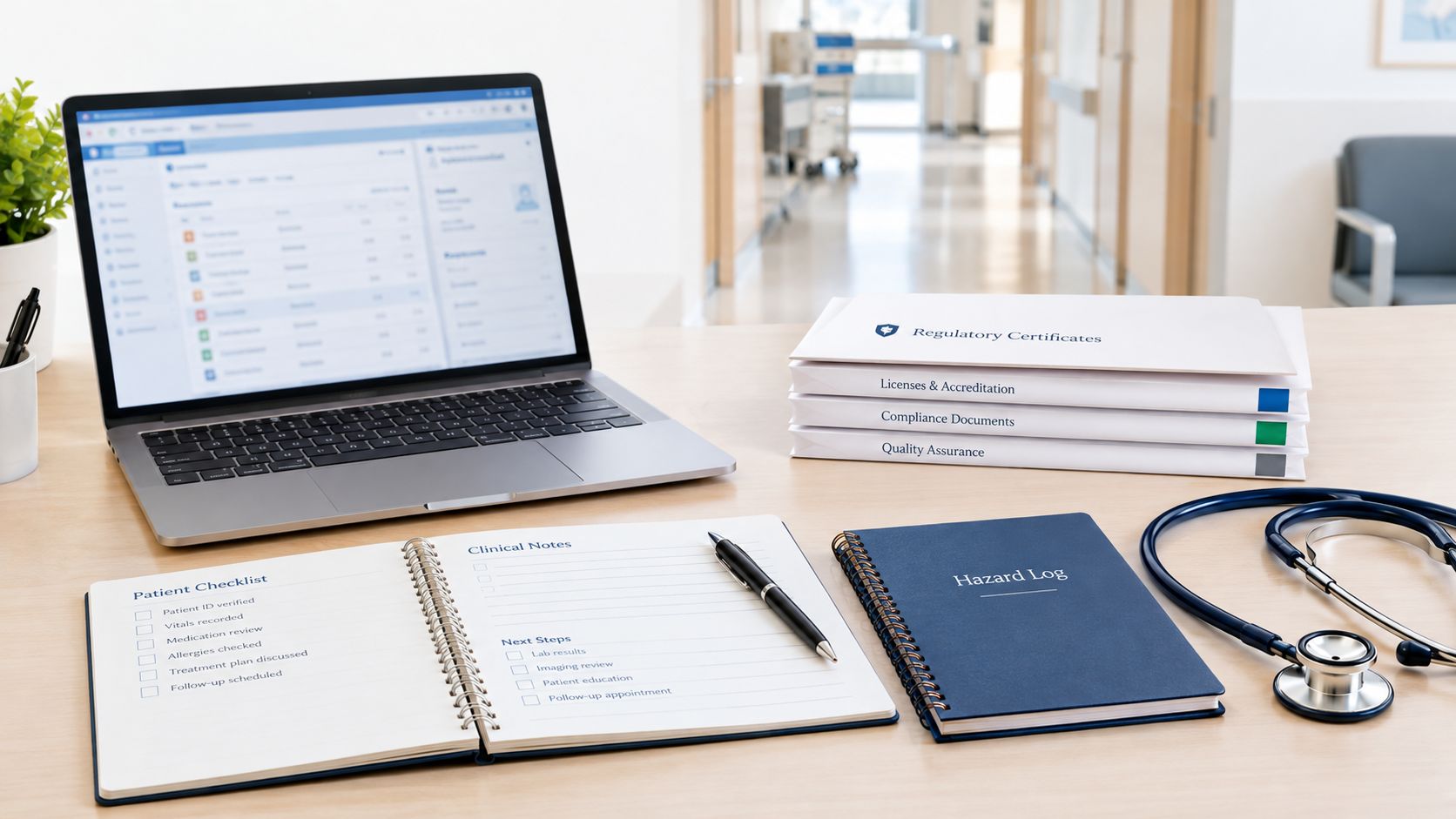
For UK buyers, autonomous triage is not a convenience feature. It's a governed clinical workflow, and the governance burden rises as the system takes on more of the initial decision-making. The MHRA says software intended to provide information used for diagnostic or therapeutic decisions will very likely fall within medical-device regulation before it goes on the Great Britain market, and the classification can increase with the seriousness of the possible harm. MHRA software guidance is clear that the intended purpose and the consequence of the recommendation both matter.
That means due diligence has to go beyond “does it seem accurate”. Buyers should ask for the intended purpose, the risk class, the clinical evaluation, the conformity evidence, and the post-market surveillance approach. For NHS procurement, the relevant safety paperwork includes DCB0129 and DCB0160, plus a hazard log, version control, escalation rules for red-flag presentations, and defined ownership when something goes wrong. NHS England's AI guidance also expects thorough clinical validation and regulated development involving clinicians, engineers, data scientists, and product designers.
The awkward truth is that more automation usually means more governance, not less. If the system independently prioritises urgency and writes into the booking record, the practice needs a transparent audit trail and a clear human override model. The safer setup is not the one with the most fluent interface, it's the one with the clearest control points.
A practical due-diligence pack should include:
Clinical safety case: evidence that hazards have been identified, assessed, and controlled.
Escalation logic: explicit handling for red flags and incomplete answers.
Change control: version governance for rules, models, and pathways.
Auditability: input, output, and escalation records that staff can review.
Post-market monitoring: a process for incidents, review, and corrective action.
If a supplier can't show who owns the safety case, the practice will own the risk by default.
That is why autonomous triage should be treated as regulated infrastructure, not just a digital front door.
Operational Impact on Practice Workflows
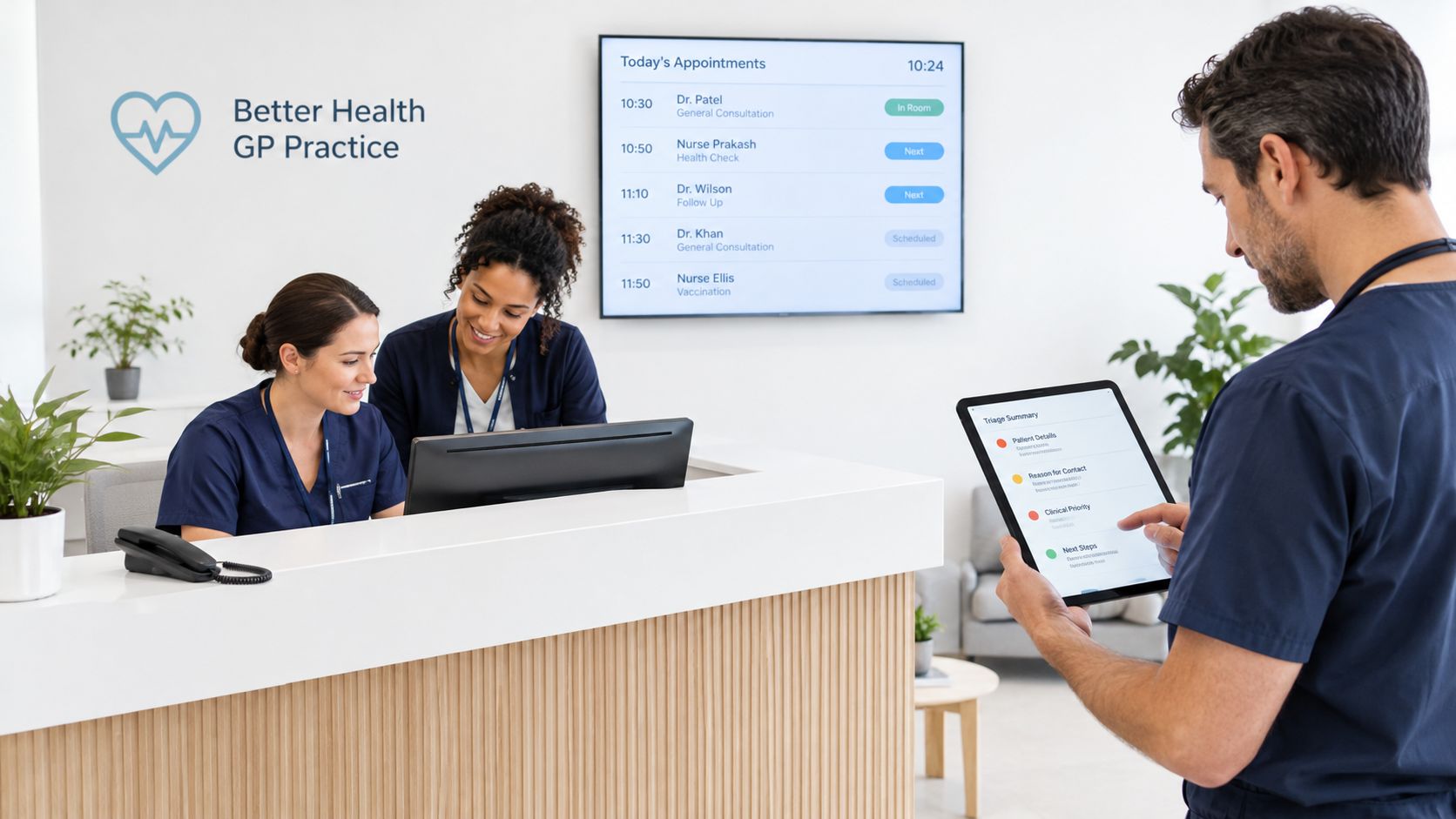
The main operational question is not whether autonomous triage saves time in theory, it's how it redistributes demand in practice. If the system captures requests continuously, the 8am access bottleneck eases because patients are no longer forced into one narrow phone window. If it also pushes a triage summary into the booking record, staff don't spend time duplicating the same administrative work.
That redistribution is what practices notice first. It changes who touches the request, when they touch it, and how often the same information gets re-entered. In operational terms, that is more useful than a vague promise to “reduce workload”.
The approved reference practices show how this can look in real settings. Langton Medical Group, serving approximately 14,000 patients across 3 sites, removed around 30 hours of GP-led triage per week to date. Swanscombe Health Centre, serving approximately 37,000 patients, returned around 422+ hours in the first 4 weeks and booked about 5,000 appointments autonomously in that period, to date. Those figures point to operational hours recovered, not a promise that every practice will see the same pattern.
Implementation Considerations for NHS Practices
The practical deployment question starts with interoperability. A triage tool needs to fit into the practice's clinical system workflow without pretending to be the clinical system itself. In this model, structured triage summaries are pushed into the booking record, while the practice keeps control of records, appointments, and clinical ownership.
That also means being honest about boundaries. Autonomous triage should not claim to read full patient records or create tasks directly in the major UK clinical systems if it doesn't. The safer implementation is narrower and clearer, capture the request, route it, write back the summary, escalate where needed, and leave the rest to the practice's established processes.
GP Triage is one example of that category. It uses Infermedica as a Class 2B medical device with DCB0129 and DCB0160 documentation, supports adult and paediatric presentations, and integrates with the major UK clinical systems by pushing a triage summary into the booking record. Approved operational data to date show approximately 2 million triages, to date, zero recorded clinical safety incidents across approximately two million triages, and around 97% concordance with GP decision-making.
Government guidance states that medical-device software requires clinical data, and manufacturers must monitor devices, report serious problems, take corrective action, and review device safety regularly as part of post-market surveillance. That expectation is not optional for NHS-facing software. It should be part of every supplier conversation, alongside the clinical safety case, change control, and escalation design.
If you're assessing autonomous triage for your practice, PCN, or ICB, GP Triage is worth reviewing as a governed workflow rather than a front-end form. Visit GP Triage to see how the platform handles autonomous routing, booking, and safety documentation in an NHS primary care context.